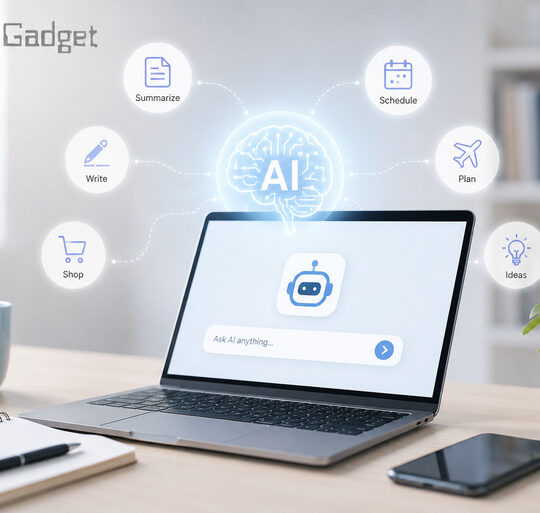

Artificial intelligence is no longer limited to technology companies and early adopters. Across industries, businesses are integrating AI into everyday operations at a pace that has exceeded many analysts’ expectations. From customer service and marketing to software development and data analysis, organizations are increasingly viewing AI as a practical business tool rather than an experimental technology.
The rapid adoption reflects a combination of technological improvements, falling implementation barriers, and growing competitive pressure. As AI capabilities continue to expand, businesses are finding new ways to automate tasks and improve efficiency.
Productivity Gains Are Driving Investment
One of the biggest reasons behind accelerated AI adoption is the promise of productivity improvements. According to McKinsey’s State of AI report, 78% of organizations reported using AI in at least one business function in 2025, up significantly from previous years.
Businesses are increasingly deploying AI for content creation, customer support, document analysis, software coding assistance, and workflow automation. These applications allow employees to spend less time on repetitive tasks and more time on strategic work.
The productivity benefits have become difficult for organizations to ignore, particularly as economic uncertainty continues to push companies toward efficiency-focused investments.
Generative AI Is Expanding Across Departments
Unlike earlier forms of automation that were limited to specialized teams, generative AI tools are being adopted across multiple departments simultaneously.
Nach Angaben von Deloitte’s State of Generative AI in the Enterprise report, more than two-thirds of organizations (67%) have increased their investments in generative AI due to measurable business value. Marketing teams use AI for content generation, customer service departments deploy AI assistants, and software teams rely on AI-powered coding tools to accelerate development.
This broad applicability has helped AI move from isolated pilot programs into company-wide strategies.
Competitive Pressure Is Accelerating Adoption
Businesses are also responding to competitive concerns. Organizations that successfully deploy AI can often deliver services faster, personalize customer experiences more effectively, and reduce operational costs.
PwC estimates that AI could contribute up to $15.7 trillion to the global economy by 2030, making it one of the most significant technology-driven economic opportunities of the decade.
As competitors invest heavily in AI capabilities, many businesses fear falling behind if they delay adoption. This fear of missing out has become a powerful driver of AI investment across industries.
Challenges Remain Despite Growing Adoption
Despite strong momentum, AI implementation continues to present challenges. Companies remain concerned about data privacy, regulatory compliance, accuracy, and workforce training.
Research from IBM’s Global AI Adoption Index found that while AI adoption continues to rise, organizations still cite concerns regarding governance, trust, and skills shortages as major obstacles.
Many businesses are therefore pursuing a balanced approach that combines AI-powered automation with human oversight and clear governance policies.
What Comes Next for Business AI?
The current wave of AI adoption suggests that artificial intelligence is becoming a standard business capability rather than a specialized technology investment. As tools become more accessible and easier to integrate, adoption is likely to spread even further across industries and company sizes.
While challenges around regulation, transparency, and workforce adaptation remain unresolved, businesses increasingly view AI as essential for maintaining competitiveness. The next phase of adoption will likely focus on moving beyond experimentation to deliver measurable, long-term value, making AI one of the most influential technologies shaping the future of business.