
Originally published in 1946, Figure Drawing for All It’s Worth is a work by American author and illustrator, Andrew Loomis. While the book has over seven decades, it is still considered by many as a great option to start learning how to draw the human figure. The book is a follow up to Loomis’ first book “Fun With a Pencil” and it explores the anatomical aspects of drawing into greater detail.
Figure Drawing for All It’s Worth is often cited by Loomis’ fans as the must-have book by this author. The book is available in Paperback, Hardcover and it has 20 pages. Here we’ll take a look at this great example of Loomis’ realistic style that has inspired artists for so many years.
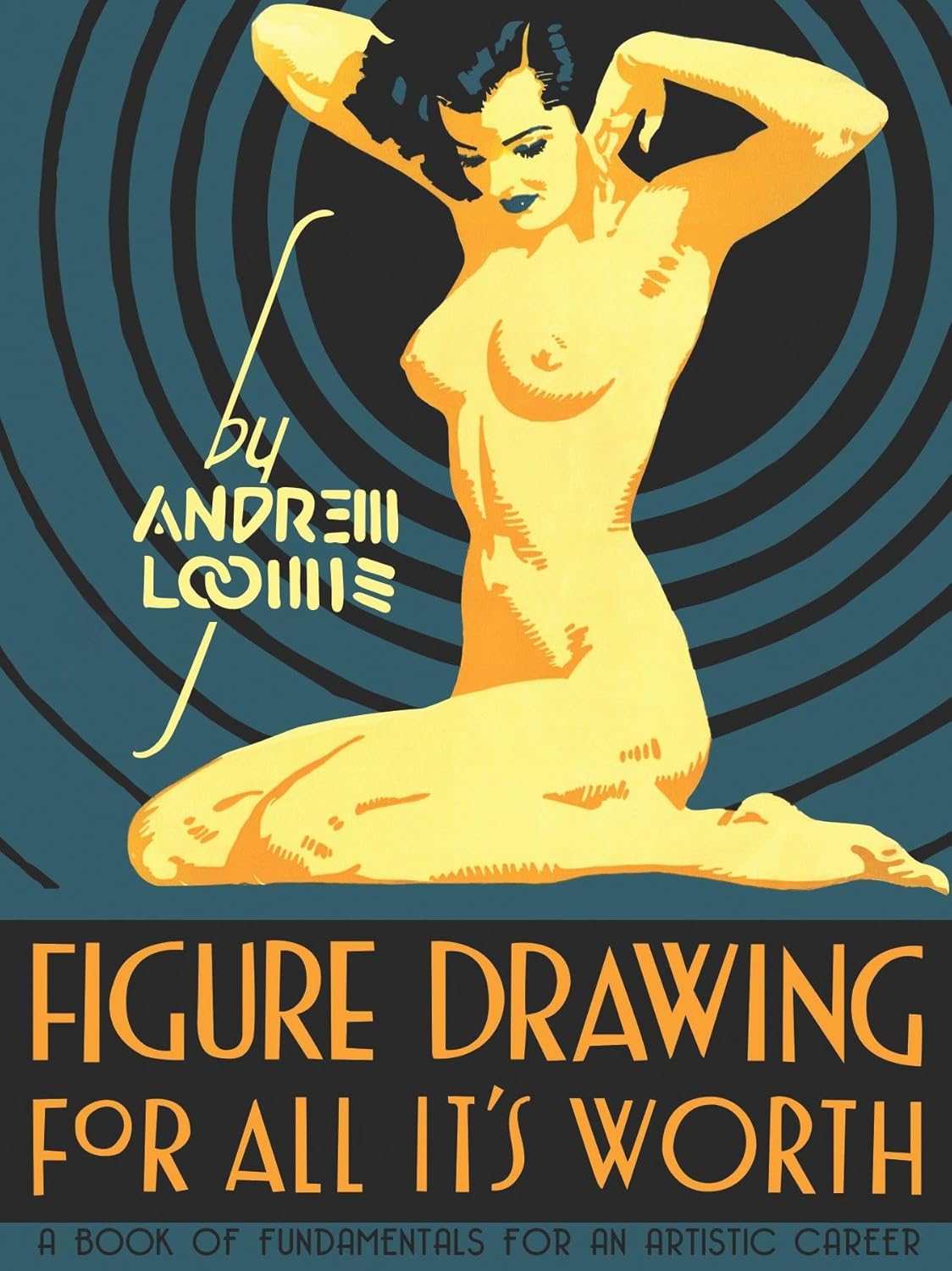
Figure Drawing for All It’s Worth
Profis
- Excellent explanation of human proportions
- Strong foundation for beginners
- Teaches construction instead of copying
- Useful for character artists
- Timeless artistic principles
- Affordable compared with many modern courses
Nachteile
- Some illustrations feel old-fashioned
- Less focused on digital workflows
- Anatomy explanations may require additional resources
Is Figure Drawing for All It’s Worth Still Worth Reading in 2026?
Andrew Loomis’ Figure Drawing for All It’s Worth remains one of the most respected figure drawing books for artists who want to understand human anatomy, proportions, gesture, and construction.
Although the book was originally published decades ago, its core lessons continue to apply in 2026 because the fundamentals of figure drawing have not changed. Artists working in traditional mediums, digital illustration, animation, comics, and concept art still rely on the same principles of body structure, perspective, balance, and movement.
Modern tools such as drawing tablets, digital painting software, and AI-assisted creative workflows have changed how artists create, but they have not replaced the importance of understanding human form.
For beginners and intermediate artists, this book remains a valuable foundation for learning how to build convincing figures from imagination.
What Does the Book Offer?
Figure Drawing for All It’s Worth features diagrams and charts that show the ideal proportions and the way in which the body is meant to be portrayed. The book goes beyond Fun With A Pencil as it provides much more information and a clear insight into Loomis’ thought process whenever he starts a new drawing.
The charts give us an idea of the way in which Loomis sees drawing and his ideas about art. In Figure Drawing for All It’s Worth, you will learn that in order to be able to master figure drawing, you will need to practice the basics constantly, until they are firmly fixed in your mind so that you can really see a progress.
Was die von Loomis vorgestellten grundlegenden Aspekte betrifft, so ist einer der wichtigsten die Idee, zu lernen, die Figur zu "manikinisieren", was bedeutet, dass man lernen muss, die Figur in eine Puppe zu verwandeln, um sie zu vereinfachen. Auf diese Weise wird es einfacher, die Bewegungen des Körpers zu lernen. Dann können Sie die Details nach und nach wieder hinzufügen, bis Sie eine realistische Figur haben. Diese Idee wurde kurz in Fun With A Pencil erwähnt, aber in Figure Drawing for All It's Worth wird sie ausführlicher dargestellt und es gibt mehr visuelle Referenzen.
Es besteht kein Zweifel daran, dass Loomis ein Meister des Zeichnens ist, und er weiß auch, welche Referenzen er auf welche Weise präsentieren muss. Zu jedem Konzept, das in diesem und in allen anderen Büchern von Loomis vorgestellt wird, finden Sie eine unglaubliche Menge an Referenzen. Das ist einer der Gründe, warum diese Bücher zu zeitlosen Klassikern geworden sind, denn man kann immer wieder zu ihnen zurückkehren und eine Lösung für etwas finden, mit dem man bei der Arbeit an einer Skizze zu kämpfen hat.
After laying out the basic concepts of figure drawing, Loomis starts referring to the parts of the body that are more complex. The head, the hands and feet are more difficult to portray in an accurate manner, without using shading. With the addition of these techniques, it is possible to bring the drawing to life, particularly if you are not only interested in doing quick sketches.
In Drawing the Head and Hands, another one of his books, Loomis gets into more details about the techniques to create realistic depictions of these body parts.
Diagrams and Muscles
Since this is an anatomy book, you can expect a lot of diagrams showing muscles and their names. These diagrams are actually very helpful as the images will start getting in your head while you are drawing.
While at first it may be intimidating and you will think that you have to learn all the muscles by heart, soon you will realize that just knowing some muscle groups and their locations, does help a lot when it comes to draw more accurately. It is best not to overthink it and just start drawing and as you are studying specific parts of the body, you will notice that you are getting familiar with the muscle groups.
Wenn man erst einmal gelernt hat, was hinter einer bestimmten Pose oder Körperstellung steckt, ist es einfacher, eine genauere Darstellung der Pose zu erreichen. Beim Zeichnen von Figuren muss man sich viele Gedanken machen, um sicherzustellen, dass man alles so genau wie möglich abbildet. Es ist mehr als nur messen und zeichnen. Wenn man eine oder zwei Linien falsch zeichnet, hat das einen erheblichen Einfluss auf das Gesamtergebnis. Unser Gehirn kann erkennen, ob etwas wirklich menschlich aussieht.
Die Quintessenz
Figure Drawing for All It’s Worth is idea for those who are starting to learn how to draw the figure and also artists who want to take their work to the next level. The book begins with many diagrams and charts that show the right proportions that you need to use when you are drawing the figure.
The idea of “manikinizing” the figure is a central part of the process of learning how to draw the figure. Loomis tells us that in order to be able to understand better how the human figure works, we need to learn to draw the figure like if it was a manikin. Then we can add the details little by little.
In this book, Loomis also touches on how to draw body parts that are more complex, such as the hands, head and feet. However, if you want a more detailed look at drawing these body parts, then it is advisable to get another one of his books: Drawing the Head and Hands. Figure Drawing for All It’s Worth features a large selection of anatomical drawings showing different muscle groups of the body.
Once you are familiar with these muscle groups, you will start to use a different approach when drawing the figure. Build the drawing up, keeping these muscle groups into consideration and you will be able to get a result that is more accurate and anatomically correct. This is a great book that allows you to draw the figure with a lot of visual aids and references that allow you to simplify things when drawing the human body.